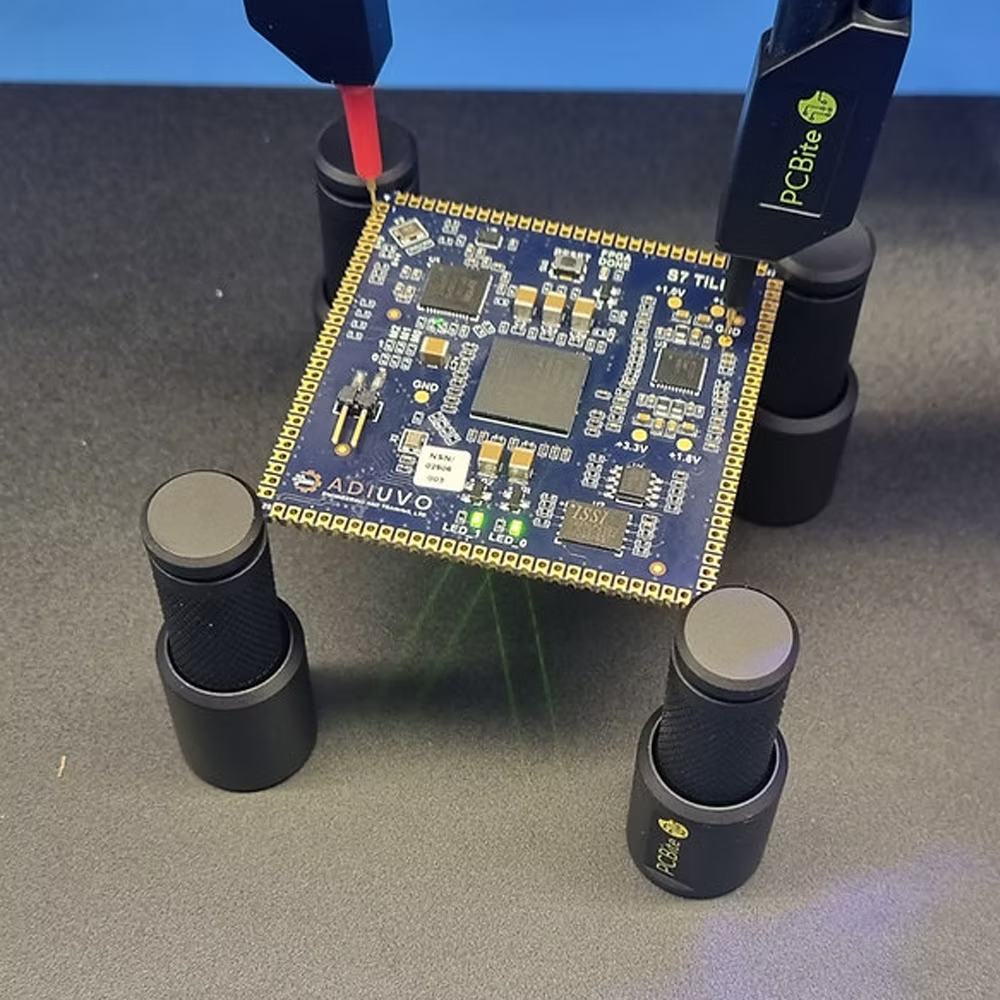
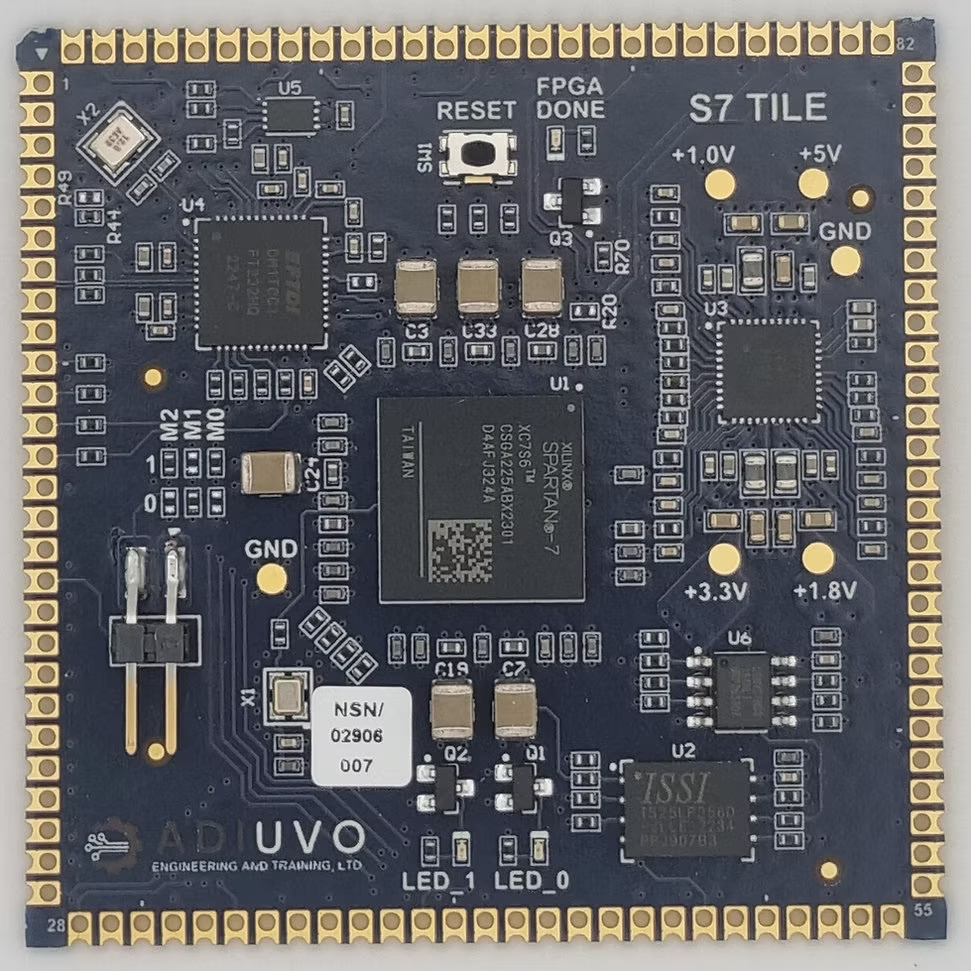
The tile measures 59mm x 59 mm and provides the following
- Supply voltage 4.5 to 18V
- Spartan 7 XC7S25 with 23,360 Logic Cells, 80 DSP, 45 BRAM
- Configuration Memory 256Mbit QSPI
- Done LED
- Two user LED
- USB JTAG - Connector needed on carrier board
- 100 MHz Oscillator
- Reset Button
- Boot selection header (JTAG/QSPI)
- PSRAM – 32Mbit – Seral RAM connected to the FPGA
- 82 IO including – Power and Ground, JTAG, 32 IO at 3v3, 41 IO configurable voltage (3v3-1.2V and LVDS)
TYPICAL APPLICATIONS WHICH WOULD BENEFIT FROM THE TILE
- System Controller – Power supply sequencing, power monitoring, configuration management, board management and supervision / communication interface.
- Protocol conversion – Convert to and from bespoke / legacy protocol.
- Sensor Aggregation – Aggregate several different sensor types for easy access by processor
- IO expansion – Provide additional interfaces e.g. QSPI, SPI, I2C etc.
- Processing offloading – e.g. Control algorithm e.g. PID, Filtering, co processing , encryption / decryption of data streams entering and leaving system
- Health and Usage Monitoring systems – Integrate with sensors e.g. accelerometer, pressure, humidity etc to monitor the environmental operating conditions.
- Rapid Prototyping – quickly demonstrate the concept required in a FPGA. Reduces risk of FPGA integration / Removes obsolescence management issues
Documentations
To help get started using the Astria Embedded System Tile the following is provided
- User guide
- Schematic
- Vivado Board definition
- Reference Designs - Including IP to enable processor to access FPGA internals using processor UART / SPI
- Tile footprint in Altium to help accelerate your design.
This information is presented on our public repository and Adiuvo can be contracted to develop your application or assist with it.